

Follow the water beyond the attractive gutter
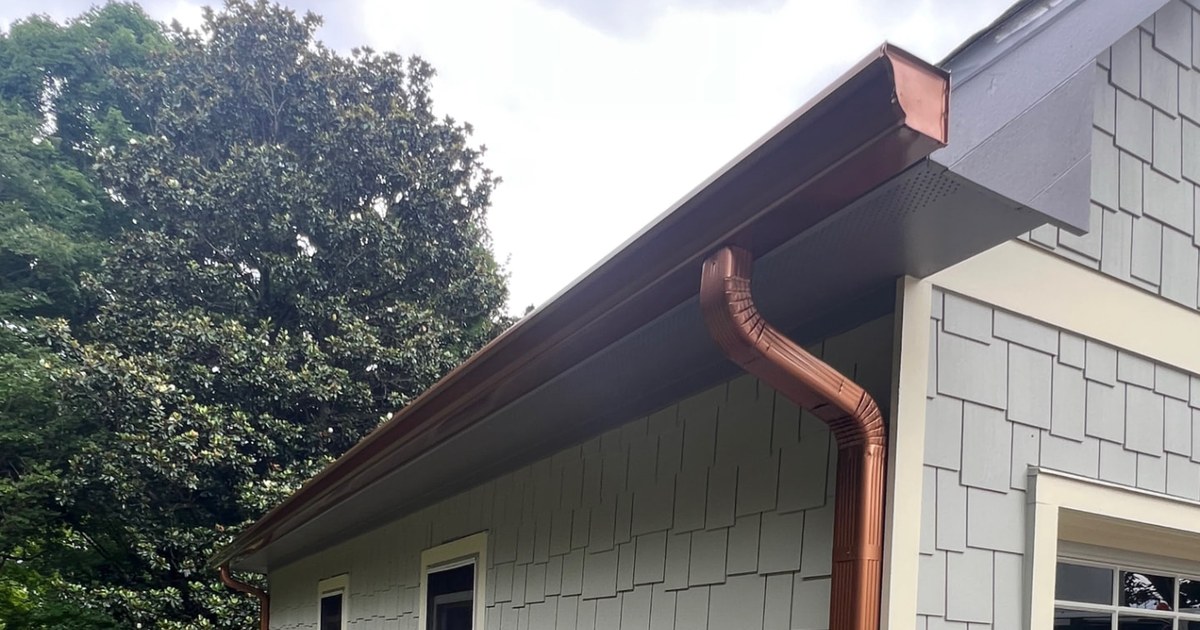
The supplied gutter-job photograph shows a copper-tone gutter ending near a garage corner, with a matching downspout running down the exterior wall. An elbow turns the outlet away from the wall at ground level. The finish is coordinated with the gutter above, but the most useful question is what happens after the water leaves that elbow.
For homeowners in Buford, this detail is worth discussing before signing a gutter estimate. A downspout can look neatly installed while its discharge arrangement still needs to be considered alongside grading, planting beds and hard surfaces. The image does not prove a drainage problem; it shows why the full route matters.
The garage-corner detail
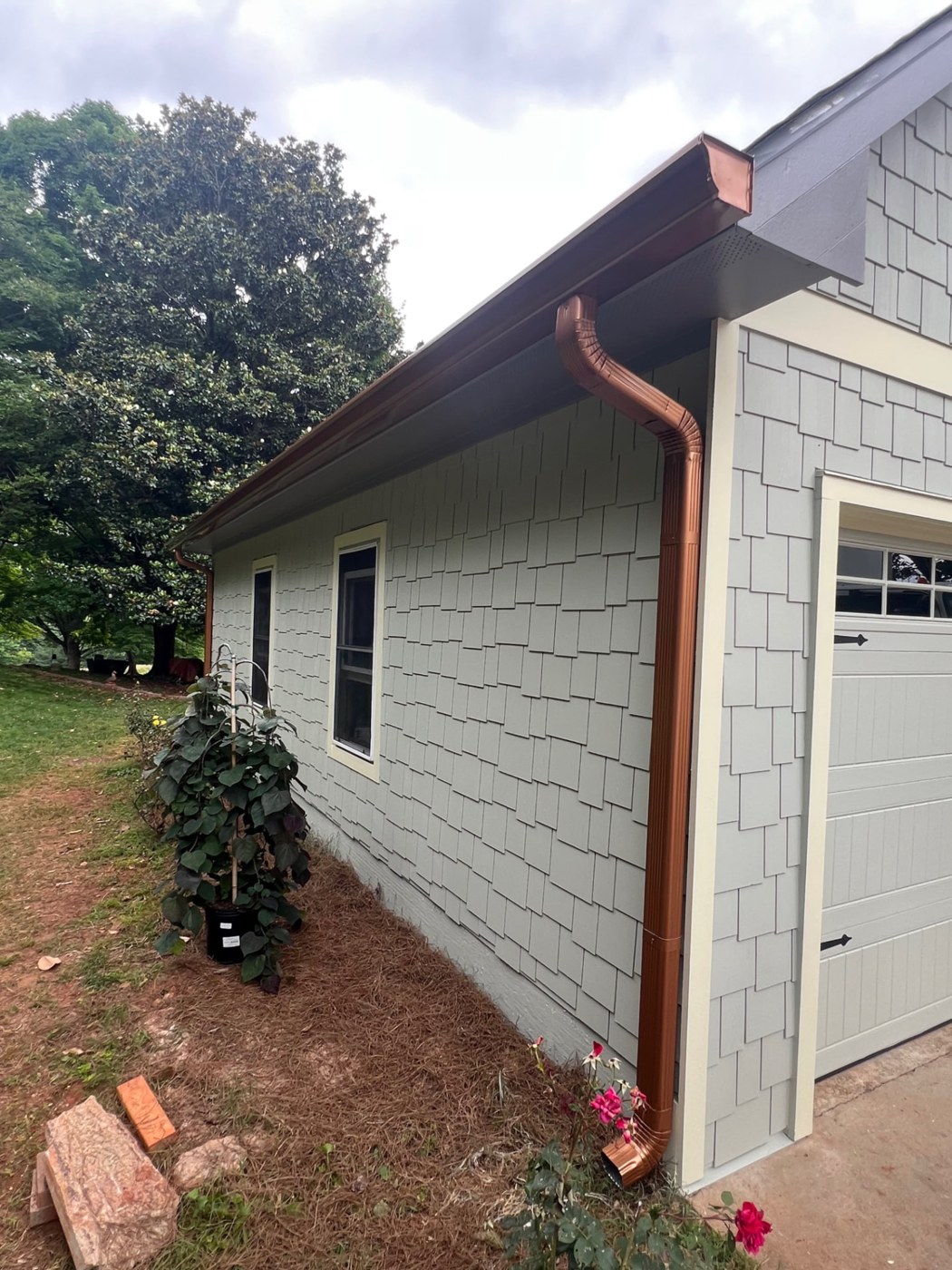
The corner gives the downspout a relatively unobtrusive vertical route. That is a design advantage, but placement should also account for where roof water enters the gutter, how much reaches the outlet and where it can be discharged. Ask the installer to explain all three rather than focusing only on keeping the pipe out of sight.
The warm metallic appearance should be described as copper-tone unless the actual material has been confirmed. Finish, base material and attachment details belong in the written scope, not in assumptions made from a picture.
What to inspect from top to bottom
Start at the gutter outlet. A contractor should check whether its location works with the roof area feeding the gutter and whether debris can obstruct it. Along the downspout, review the planned attachment points and the transitions around trim or projecting parts of the wall.
At ground level, establish where the concentrated flow goes. A planting bed is not automatically a drainage solution. Depending on the site, a suitable extension or drainage connection may be appropriate, but that choice requires assessment of slope, space, soil and the discharge destination.
The DOE guidance on gutters and downspouts explains why directing runoff away from the foundation matters. A complete plan should avoid creating a new concentration of water beside the house or shifting a problem toward a neighboring property.
Warning signs to discuss during an estimate
- Overflow at the gutter during rain.
- Loose or disconnected downspout sections.
- Water collecting near the garage or adjoining wall.
- Erosion where the outlet discharges.
- Repeated staining or dampness near the roof edge.
- Debris that regularly obstructs the outlet.
These observations help frame an inspection; they do not identify the cause by themselves. Avoid roof access or moving ladders during wet weather. If possible, observe drainage safely from the ground and tell the contractor where water appears to go.
Protect wall finishes without inventing a siding problem
A downspout is attached beside cladding and trim, so gutter planning intersects with the wall finish. A siding contractor should be involved if replacement or repair of that wall is actually part of the work. The photograph does not establish a need for siding replacement or identify the cladding material.
If you are planning home exterior remodeling, define the scopes separately and coordinate their sequence. Our gutter service, painting service and siding options can help you compare the relevant tasks without turning a focused drainage improvement into unrelated work.
Ask for a complete written drainage scope
An estimate should cover the gutter run, downspouts, attachment and discharge arrangements, along with any supporting repairs that are known before work begins. Ask how changes will be handled if concealed damage is found. Clear scope language makes it easier to compare proposals that otherwise look similar.
See our gallery for exterior details and reviews for homeowner feedback. Request a written estimate for planned work on your own home. Homeowner estimates are free; pre-purchase property assessments are $100, credited toward the project if you hire EZY Exteriors.
Explore our seamless gutters and work in Buford. Request a homeowner project estimate for the work you are considering.