
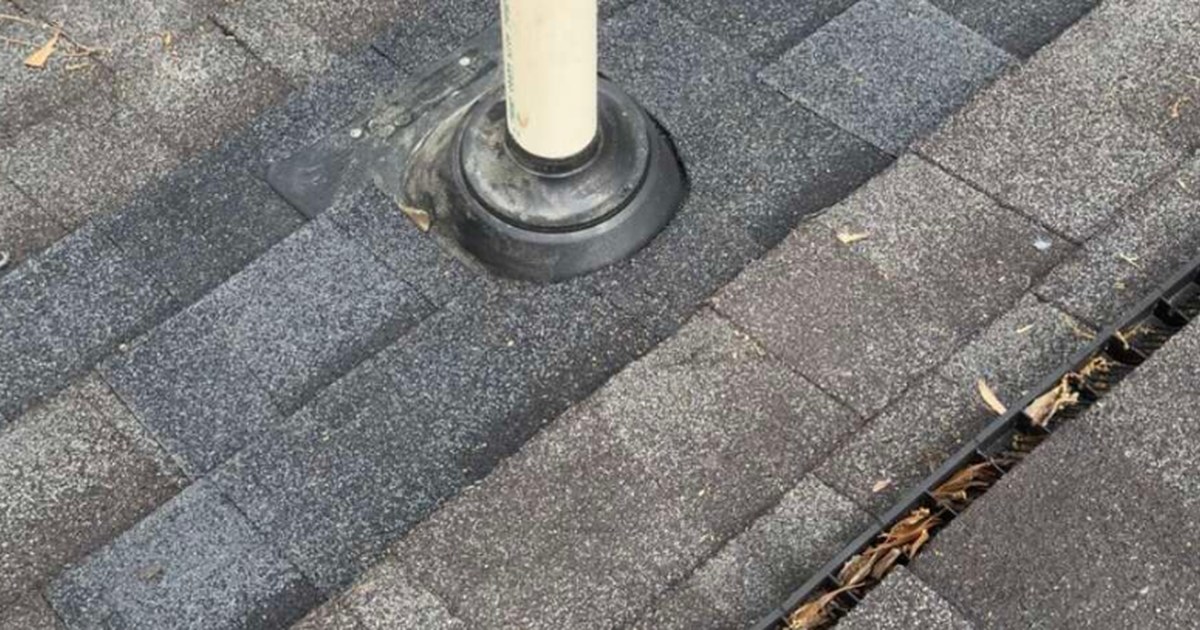
What the pipe-boot photos actually show
The original photo shows a worn, cracked seal around a roof vent pipe, with aging patch material over the surrounding flashing. The second photo shows a different pipe-boot assembly seated around an upright pipe, surrounded by asphalt shingles. These are useful examples of a small roof detail that deserves attention before a homeowner assumes the entire roof has failed.
For homeowners in Lawrenceville, the important question is not simply whether a patch can cover the crack. It is whether the pipe boot, flashing, nearby shingles and roof below it can form a dependable water-shedding system. A roofing contractor needs to inspect those components together. The photographs illustrate the detail; they do not establish the age or remaining life of the whole roof.
The worn seal before repair
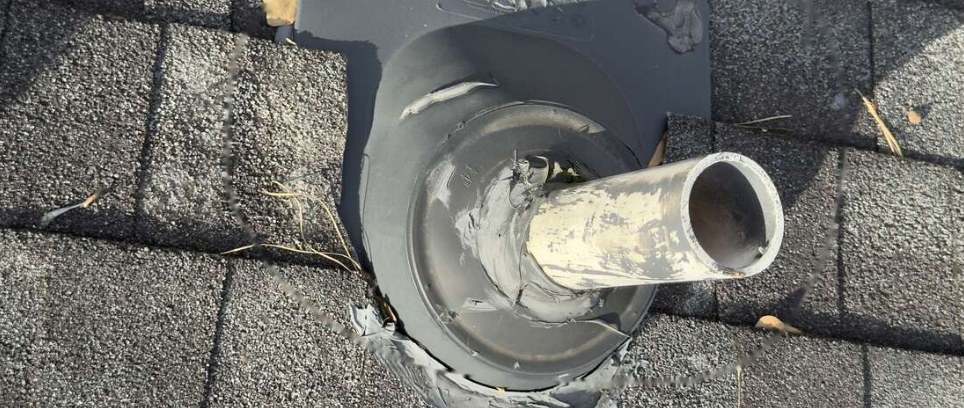
A pipe boot closes the gap where a plumbing vent passes through the roof. When its seal splits or pulls away, water has a potential path through the penetration even if much of the surrounding shingle surface still looks serviceable. Adding more sealant is not automatically the right repair: the condition of the flashing and its integration with the roof covering matter too.
Water inside the house may appear away from the actual entry point. Describe where you noticed staining and when it occurs, but let an inspection establish the cause. Photographing a ceiling stain is useful; climbing onto the roof to investigate is not a safe substitute for professional access.
What a roofing contractor should inspect
- The rubber seal around the pipe and the condition of the flashing base.
- How the flashing overlaps and is overlapped by the surrounding shingles.
- Loose, damaged or disturbed shingles near the penetration.
- Other roof penetrations and nearby transitions that could also admit water.
- Evidence of moisture below the roof, where accessible and safe to inspect.
The roofing services page explains the broader scope EZY Exteriors can evaluate. A useful written estimate separates the identified repair from optional work and explains what might change if concealed damage is found.
The updated pipe-boot detail
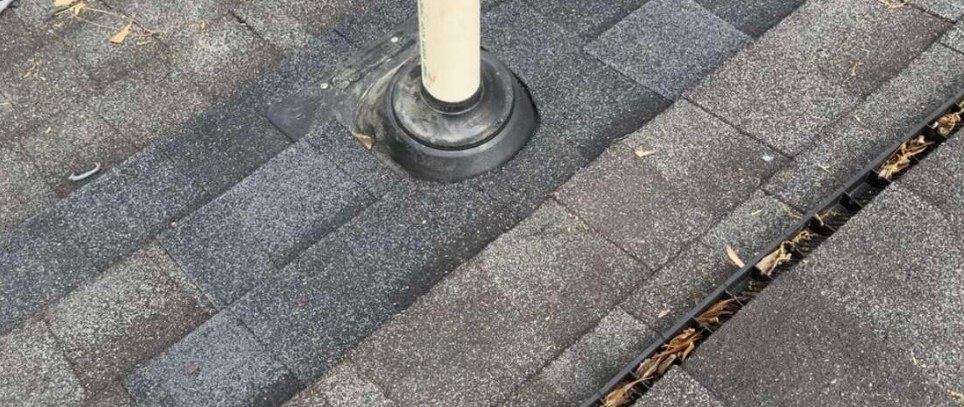
The second photograph makes the pipe penetration easier to inspect without a graphic border or printed labels. It is a visual reference, not proof of every concealed installation step. A complete repair should follow the requirements of the roof covering and flashing product, including their overlap and attachment instructions.
When roof replacement belongs in the conversation
Roof replacement becomes a different discussion when an inspection identifies widespread deterioration, repeated problems across multiple areas or conditions that make a localized repair unsuitable. A single cracked boot does not answer that question. Ask your contractor to explain whether the finding is isolated and to document why the recommended scope is repair or replacement.
If you are coordinating home exterior remodeling, handle active roof leaks before cosmetic wall work. A siding and roofing company can help you understand how roof edges, wall transitions and drainage relate without treating every maintenance issue as a full remodel.
Planning the next step in Lawrenceville
Compare this detail with our pipe-boot repair project, then read homeowner reviews before requesting an inspection. Share any previous repair history and whether the leak changes with rain direction or intensity.
Request a written estimate for work you plan to have done on a home you own. Homeowner estimates for planned work are free; pre-purchase real estate assessments cost $100, credited toward the project if you hire EZY Exteriors.
For background on why roof penetrations need properly integrated flashing, see the DOE Building America guidance on existing roof penetrations.