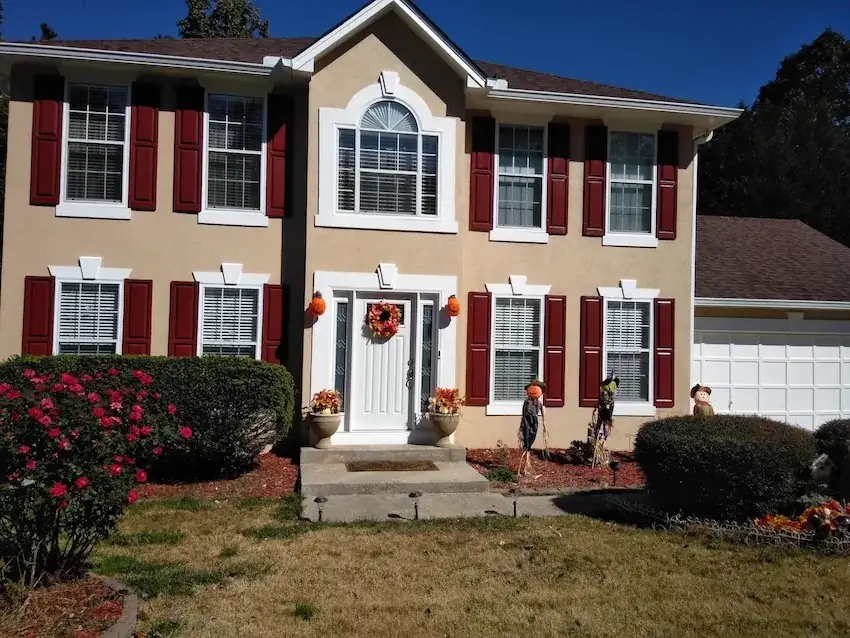
A full exterior repaint and trim refresh
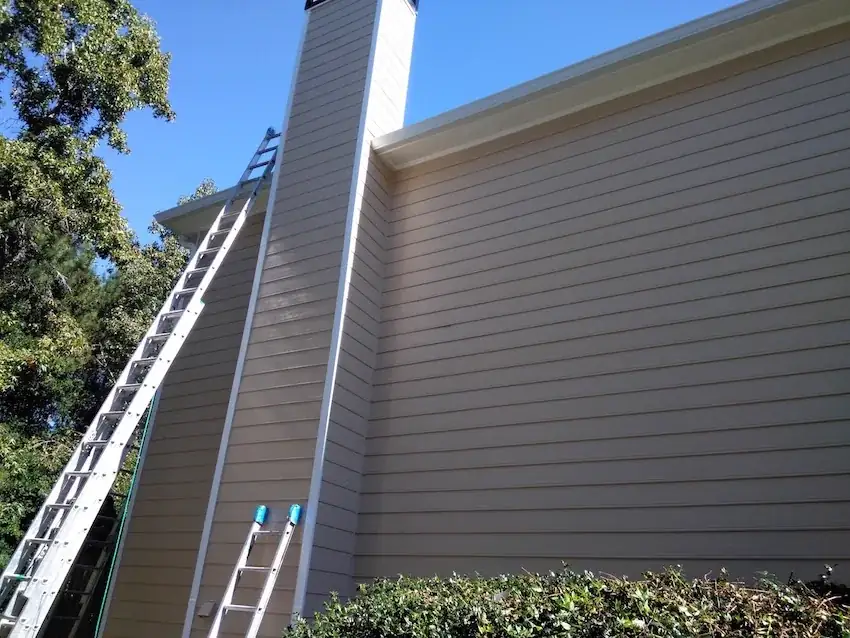
David's house had a paint problem and a wood problem, and the two were feeding each other. The finish had chalked and dulled across the sun-exposed elevations, and in several places, particularly on the fascia and around a couple of window surrounds, the paint had failed completely and the wood underneath had started to go soft.
A paint-only quote would have been cheaper. It also would have failed, because you cannot get a coating to bond to deteriorated wood. We quoted the repairs and the repaint together and explained exactly which boards were coming off.
Prep, which was most of the job
The exterior was washed to remove pollen, chalk and mildew, with extra attention to the shaded north elevation where mildew was heaviest. Once the house was dry, we scraped all failing paint back to a sound edge and feathered the transitions so the repair lines would not telegraph through the finish coats.
Then the carpentry. Rotted fascia sections were replaced, damaged trim around two windows was cut out and rebuilt, and split boards were repaired or replaced rather than filled. Every joint, seam and penetration was re-caulked with an exterior-grade sealant, and all bare wood and repairs received primer before any topcoat went on.
Color and finish
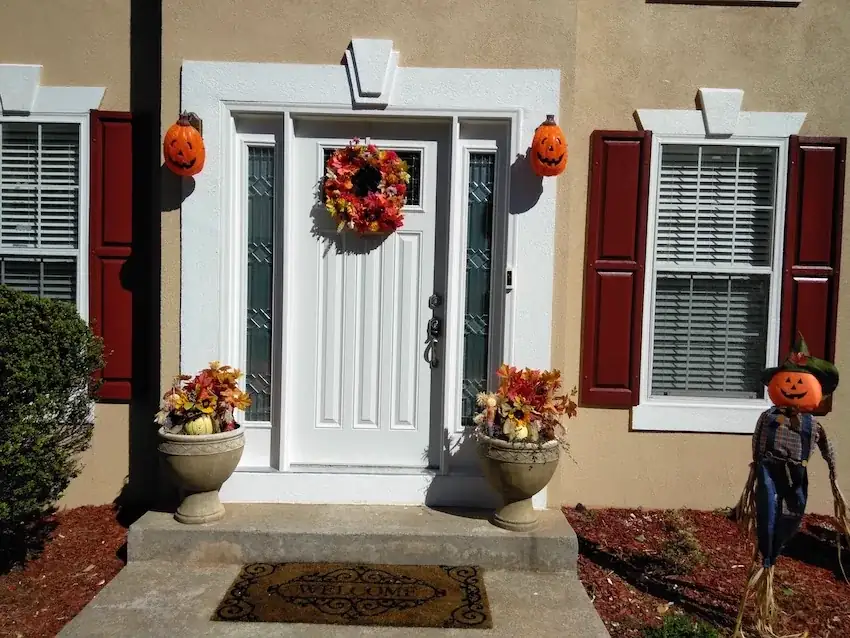
David went with an updated palette: a refreshed body color, a crisp trim color that lifts the window openings, and a front door accent that gives the entry a focal point. We put samples on the actual house and looked at them in morning and afternoon light before ordering, because exterior colors shift dramatically with sun angle and nothing about a fan deck predicts that.
Two finish coats were applied at the manufacturer's spread rate. Cut lines were kept tight at the brick, the gutters and the roof edge, since sloppy cut lines are the thing homeowners notice from ten feet away for the next decade.
The result and what it protects
The house looks new. More importantly, the wood is sound, the joints are sealed, and the finish is a full-thickness two-coat system over primed substrate instead of a thin coat over failing paint. That difference is the gap between a repaint that lasts three years and one that lasts closer to ten.
Exterior paint is prep, not paint
Two crews can use the same gallon of premium paint and get results that are five years apart in lifespan. The difference is what happened before the first coat. On every exterior repaint we run, the majority of the labor is preparation: washing, scraping, sanding, repairing, priming and sealing. The paint itself is the last and fastest part of the job.
Georgia is hard on exterior finishes. Pollen season coats everything, summer humidity and UV break down the resin, and the north-facing elevations grow mildew that will bleed through a fresh coat if it is not killed first. A repaint that skips those steps looks great for one season and starts peeling in the second.
How we do it
- 1.Wash. The full exterior is cleaned so paint bonds to the surface instead of to dust, pollen, chalk and mildew.
- 2.Scrape and sand. Failing paint is removed back to a sound edge and feathered so the transition does not telegraph through the new film.
- 3.Repair. Rotted trim, split fascia, damaged siding boards and failed glazing get replaced or repaired. Painting over rot just hides it.
- 4.Caulk and seal. Joints, window and door surrounds, penetrations and trim seams get fresh exterior-grade sealant.
- 5.Prime. Bare wood, repairs, stains and tannin-prone surfaces get spot or full primer so the topcoat cures evenly.
- 6.Two finish coats. Applied at the manufacturer's spread rate, in the right temperature and humidity window, with cut lines kept tight on brick, stone, gutters and roofing.
- 7.Walk and touch up. We do the final inspection with the homeowner in daylight and touch up anything either of us flags.
What it costs and how long it takes
Most whole-house exterior repaints run a few days to just over a week, driven by prep condition far more than by square footage. A house with sound existing paint moves quickly. A house with widespread peeling, chalking and rotted trim takes longer, and we would rather quote that honestly than discover it on day two.
How we work with homeowners
EZY Exteriors was founded by a craftsman, not a call center, and the way we run a job reflects that. Every estimate is free, and it is a real written scope rather than a number scribbled on a card. We tell you what we found, what we are replacing, what we are not touching and what the allowance is if we open a wall and discover more than the photos showed. Pricing is straight. There are no same-day discounts, no financing pressure and no scare tactics about your roof failing next week.
Our crews are vetted, experienced installers who do this work every day, and a project manager stays on the job so questions get answered by someone who has actually been on site. We document work in progress with photos, including the parts that get covered back up, so you know what you paid for.
We do not process insurance claims and we are not adjusters. What we will do is inspect, document what we find and give you a clear scope you can hand to your carrier if the damage is genuinely storm related. If it is normal wear, we will tell you that too.
Considering a similar exterior painting project?
If you are in metro Atlanta and North Georgia and looking at a exterior painting project on your own home, the fastest path is a free on-site estimate. We will walk the exterior with you, point out what is actually failing and what has life left, explain the material options in plain terms and put a written scope and price in your hands. There is no obligation and no follow-up pressure.
Photos of finished work like this one are the best way to judge a contractor, so browse our other projects, read our homeowner reviews, and then reach out when you are ready. We serve metro Atlanta and North Georgia and the surrounding communities, and we are happy to tell you when a repair is the smarter spend than a replacement.
Project photos