Exterior painting and roof repair
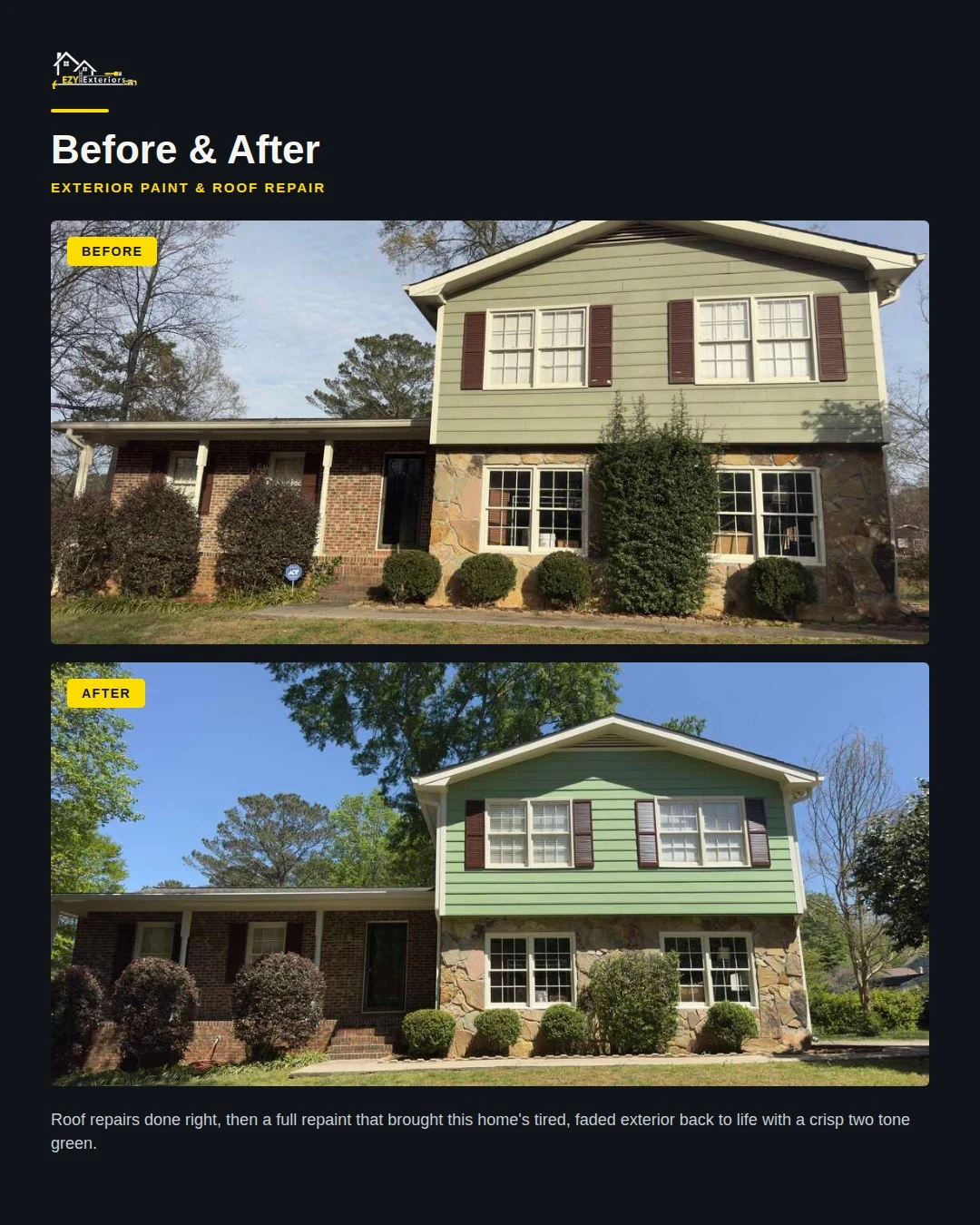
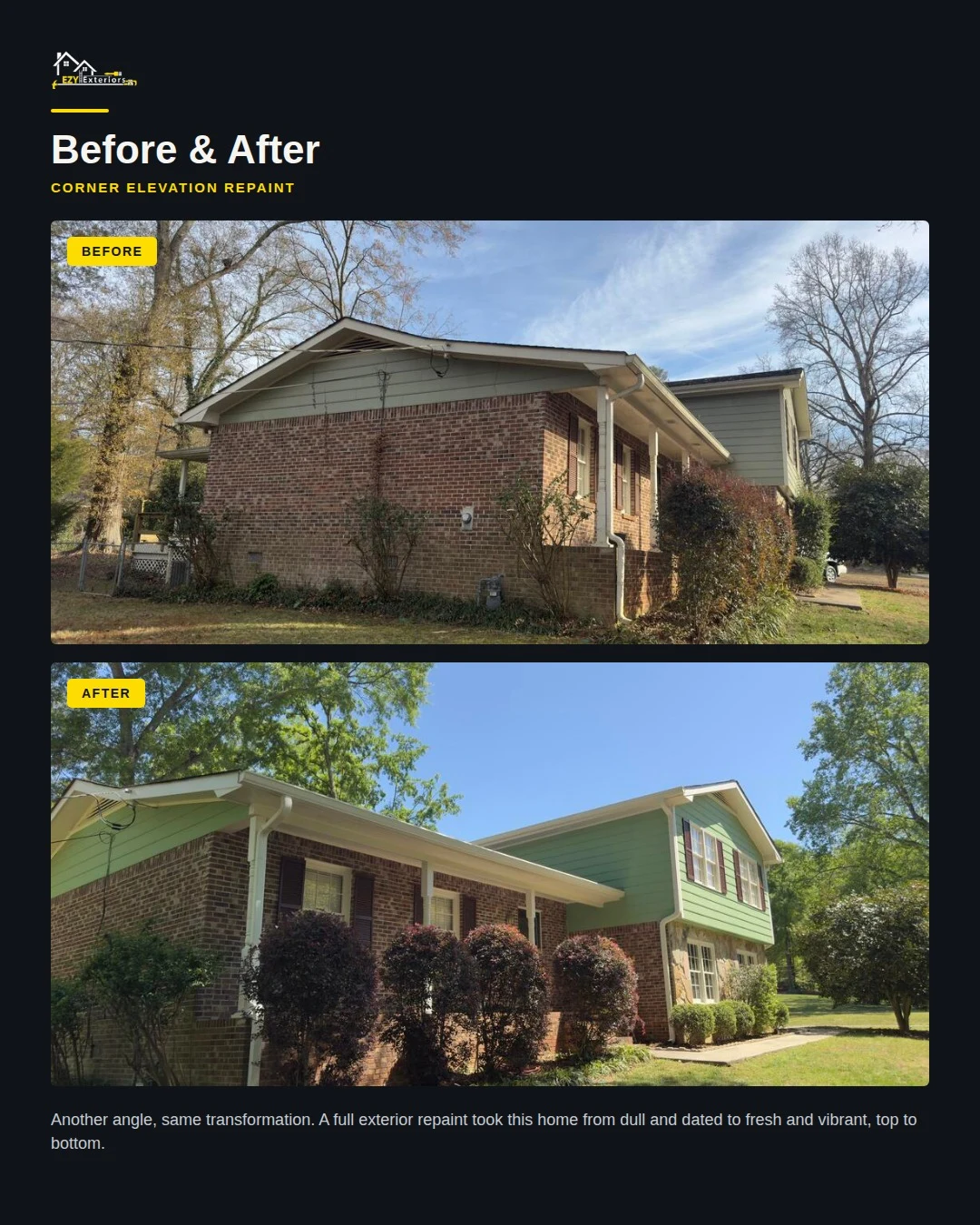
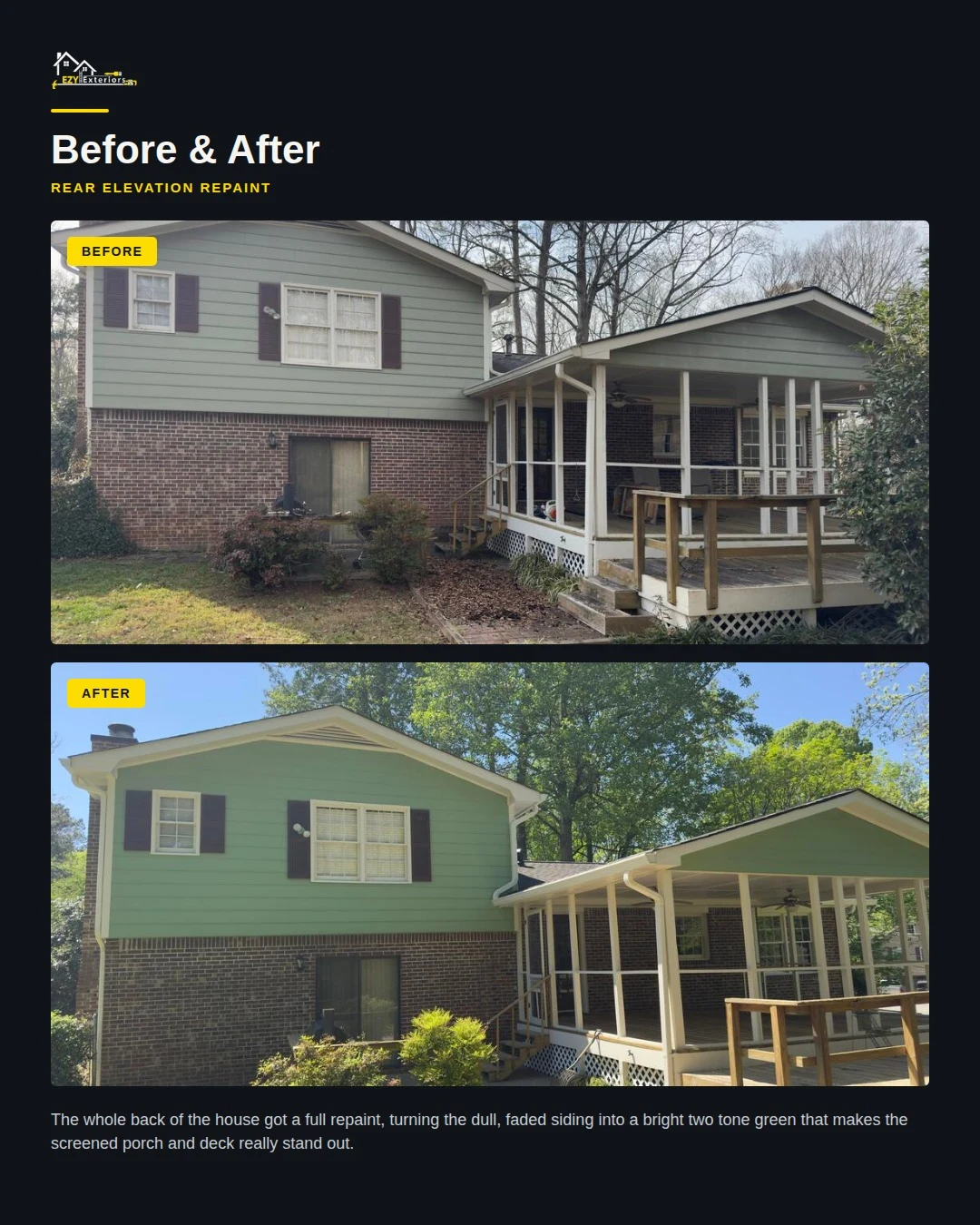
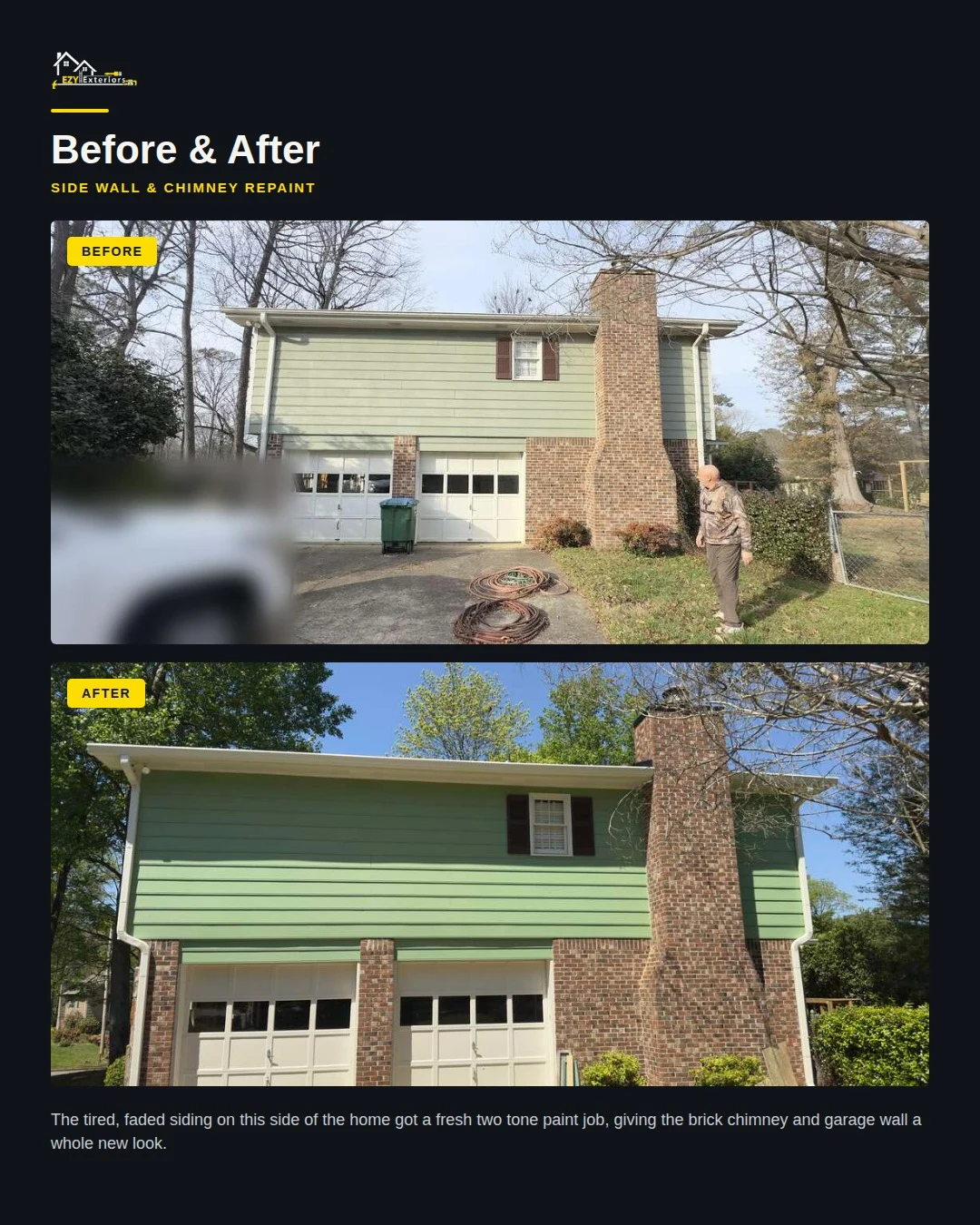
This split-level project combines exterior painting with roof repair. The comparison photographs show a green-painted exterior with light trim. The front, rear, gable and chimney-side views document different sections of the same home.
Comparing the finished elevations
The horizontal siding and light trim contrast with the brick and stone areas. The rear and side photographs extend the view beyond the street-facing facade, showing the exterior finish around the home's existing windows, rooflines and outdoor areas. The chimney-side view shows the painted finish carried across that elevation as well, so the whole exterior reads as one consistent scheme.
Combining painting with roof repair
Exterior projects often pair naturally. When a home needs both a repaint and roof attention, doing them in the same period makes practical sense: access equipment is already on site, and the finished surfaces are not disturbed by a later project. The photographs here document the finished exterior and the roof repair as parts of the same project, without establishing the order or duration of the work.
What a full exterior repaint involves
A whole-house repaint generally starts with washing and surface preparation — scraping failed paint, sanding edges, caulking joints — before primer and finish coats are applied to siding, trim and details. On a split-level home like this one, the multiple rooflines and offsets mean more trim edges and transitions than a simple box-shaped house, which is part of why the light trim reads so clearly in the finished photographs.
Exterior painting and roofing in the Atlanta area
Georgia's heat, humidity and storms wear on both paint and roofs, and it is common for both to need attention in the same season of a home's life. EZY Exteriors handles exterior painting and roofing across metro Atlanta and northeast Georgia, as separate projects or combined ones.
Learn about our exterior painting and roofing services, or contact us to discuss your home. Free estimates are for homeowners on work they plan to have done.
The split-level challenge
Split-level homes are common across the Atlanta area, and their exteriors are more involved than they look. The offset levels mean more rooflines, more wall-to-roof transitions, more inside and outside corners, and more trim edges than a simple two-story box. Every one of those transitions is a place paint has to be cut in cleanly and flashing has to be right. The multiple elevations in this project's photographs — front, rear, gable and chimney side — reflect that complexity, and the consistent finish across all of them is what makes the completed exterior read as one scheme.
Roof repairs on complex rooflines
The same geometry that makes split-levels interesting also concentrates water. Valleys where roof planes meet carry more runoff than any other part of the roof, and the walls that rise above lower roof sections depend on step flashing to stay dry. Roof repairs on these homes often trace back to those junctions. The repair documented in this project addressed the roof alongside the repaint, so the finished exterior is protected as well as refreshed.
Related services
Combined projects like this often extend to seamless gutters, siding repair or shutters. Browse more completed projects, read recent articles, or see the service areas we cover.
Why exteriors and roofs age together
It is not a coincidence that painting and roof work so often land in the same project. Both are aged by the same forces — sun, heat, wind-driven rain — and both tend to reach the end of their service life within the same window of a home's history. A homeowner who repaints without checking the roof risks staining fresh paint with a leak; a homeowner who replaces a roof without looking at the paint often finds the walls suddenly look tired next to the new shingles. Assessing the whole exterior at once, as this project did, avoids both surprises.
Getting a combined assessment
If your home is due for more than one kind of exterior work, a single visit can usually scope all of it. EZY Exteriors handles exterior painting, roofing and siding across the Atlanta area, so one assessment can cover the full exterior rather than requiring three contractors and three opinions. Browse other projects or contact us to start the conversation. Free estimates are for homeowners on work they plan to have done.
Maintaining a painted exterior
A fresh repaint asks little of its owner, but a few habits extend its life considerably. Rinsing the walls occasionally keeps mildew and pollen from taking hold, especially on shaded elevations. Keeping shrubs trimmed back from the siding lets the walls dry after rain. And touching up small chips and dings early prevents the spots where peeling starts. None of this is demanding — an hour or two a year — but it is the difference between a paint job that ages gracefully and one that needs attention early.
Working with one contractor for the whole exterior
There is a practical advantage in having one contractor handle a combined project like this: the scope is coordinated, the schedule is single, and the responsibility is undivided. When painting and roof work are split across companies, each one's warranty stops at the edge of its own work, and the homeowner is left refereeing any problem at the boundary. EZY Exteriors handles the full exterior — painting, roofing, siding and gutters — so projects like this stay under one roof, so to speak. Contact us to discuss your home. Free estimates are for homeowners on work they plan to have done.
Project photos