A straightforward fiber cement transformation
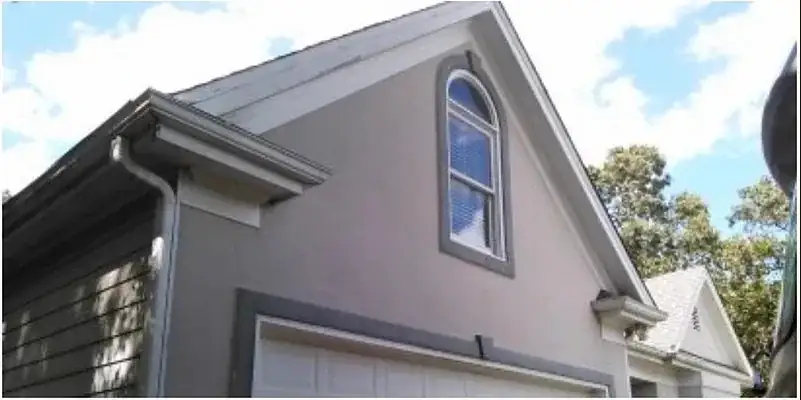
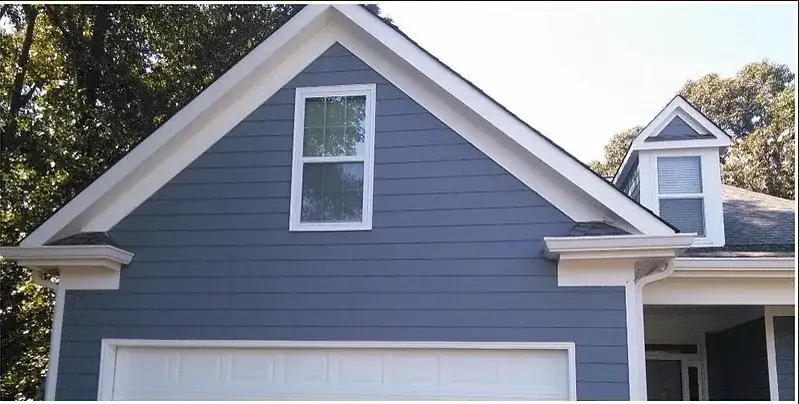
Karen's before-and-after is one we point people to when they ask what fiber cement actually changes about a house. The original exterior was not catastrophically failing. It was just old: faded, chalky, with paint that had stopped holding at the edges and trim that had been caulked so many times the profiles were soft.
The question she asked is the right one. Is it worth the difference in price over vinyl? For her situation, planning to stay in the home and wanting a painted finish with real depth, the answer was yes.
Getting the substrate right
We stripped the house to the sheathing. There were no major surprises, which happens more often than the internet suggests, but there were the usual small ones: a section of soft sheathing under a window, some split trim at a gable return, and a run along the back where the bottom course had been installed too tight to a hard surface and had been holding water against itself. All of it was replaced or corrected.
House wrap went on continuous and correctly lapped, and every opening was flashed with metal at the head before trim was installed.
The new exterior
Fiber cement lap siding with a full trim package. Corner boards and window surrounds are noticeably heavier than what was on the house before, which is the main reason the after photos look like a different property. The finish is uniform on every elevation because the product takes and holds color evenly instead of chalking at different rates depending on sun exposure.
Fastening followed the manufacturer's pattern and the required clearances were maintained at grade, at the roof edge and above horizontal surfaces so the boards are never sitting in standing water.
Why the before-and-after is so dramatic
Three factors: consistent color across the whole house instead of elevation-by-elevation fading, deeper shadow lines from the board profile, and heavier trim framing every opening. It is the same house, the same footprint and the same roof, and it reads as a significantly more expensive home.
Maintenance from here
Periodic washing, occasional sealant inspection at trim joints, and a repaint interval measured in the range of a couple of decades rather than a handful of years. That is the actual return on choosing fiber cement.
Why fiber cement is the upgrade most Georgia homes need
Fiber cement siding is a blend of cement, sand and cellulose fiber. That mix is what makes it behave so differently from the wood, hardboard and older composite products it usually replaces on North Georgia homes. It does not swell when it gets wet, it does not feed termites, and it holds paint far longer than wood because the board itself is dimensionally stable. In a climate that swings from humid summer storms to freeze-and-thaw winter mornings, that stability is the whole point.
The other reason homeowners choose it is appearance. Fiber cement lap siding carries a deep shadow line and a crisp reveal that reads as real wood from the street, and it can be paired with panel-and-batten, shakes and wide trim without looking busy. Because the boards accept color coatings so well, the finish stays even across large elevations instead of blotching the way tired hardboard does.
How we install it
Every fiber cement project we run follows the same sequence, because the order is what keeps water out for the next twenty years:
- 1.Tear off to the sheathing. Old siding, old trim and old flashing come off so we can see the actual condition of the structure. Nothing gets sided over.
- 2.Repair the substrate. Soft sheathing, rotted framing around windows, damaged bottom plates and split fascia get replaced with new material before anything decorative goes back on.
- 3.Weather barrier and flashing. House wrap is installed and lapped correctly, then window heads, door heads, kick-outs and roof-to-wall transitions get metal flashing. This is the step that gets skipped on cheap jobs, and it is the reason those jobs leak.
- 4.Trim first, then field boards. Corners, window and door surrounds and frieze boards go on, then the lap siding is installed to the manufacturer's fastening and clearance specs, with proper gaps at horizontal surfaces.
- 5.Seal, caulk and finish. Joints are sealed with a high-quality exterior sealant, penetrations are addressed, and the finish coat or factory color is inspected in daylight.
- 6.Clean up and walk the job. Magnetic sweep for fasteners, debris hauled off, and a walk-around with the homeowner before we call it done.
What it costs and how long it takes
Most fiber cement replacements on a single-family home in our service area run one to two weeks of on-site work, depending on square footage, how many stories, how much rot we uncover and how much custom trim detail the design calls for. It is a bigger investment up front than vinyl, and it is the right call when a homeowner plans to stay in the house, wants a painted look, or is replacing a product that has already failed once.
How we work with homeowners
EZY Exteriors was founded by a craftsman, not a call center, and the way we run a job reflects that. Every estimate is free, and it is a real written scope rather than a number scribbled on a card. We tell you what we found, what we are replacing, what we are not touching and what the allowance is if we open a wall and discover more than the photos showed. Pricing is straight. There are no same-day discounts, no financing pressure and no scare tactics about your roof failing next week.
Our crews are vetted, experienced installers who do this work every day, and a project manager stays on the job so questions get answered by someone who has actually been on site. We document work in progress with photos, including the parts that get covered back up, so you know what you paid for.
We do not process insurance claims and we are not adjusters. What we will do is inspect, document what we find and give you a clear scope you can hand to your carrier if the damage is genuinely storm related. If it is normal wear, we will tell you that too.
Considering a similar fiber cement siding project?
If you are in metro Atlanta and North Georgia and looking at a fiber cement siding project on your own home, the fastest path is a free on-site estimate. We will walk the exterior with you, point out what is actually failing and what has life left, explain the material options in plain terms and put a written scope and price in your hands. There is no obligation and no follow-up pressure.
Photos of finished work like this one are the best way to judge a contractor, so browse our other projects, read our homeowner reviews, and then reach out when you are ready. We serve metro Atlanta and North Georgia and the surrounding communities, and we are happy to tell you when a repair is the smarter spend than a replacement.
Project photos