Fiber cement siding and trim
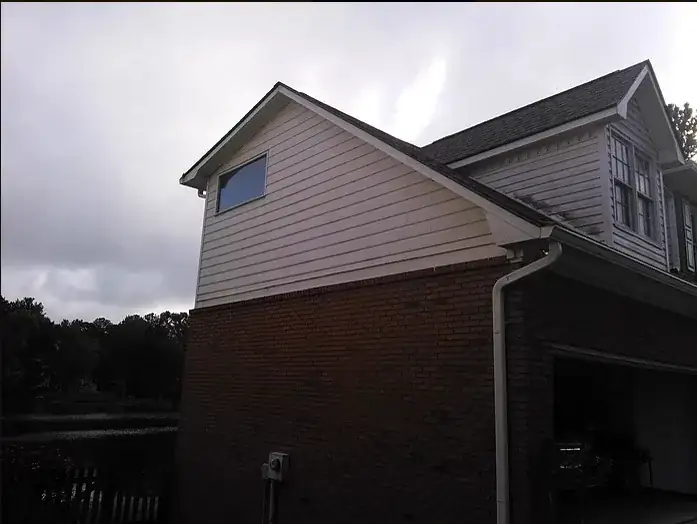
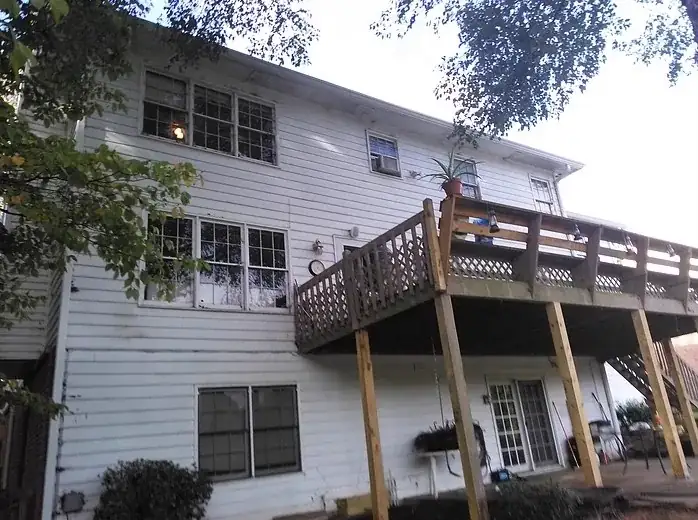
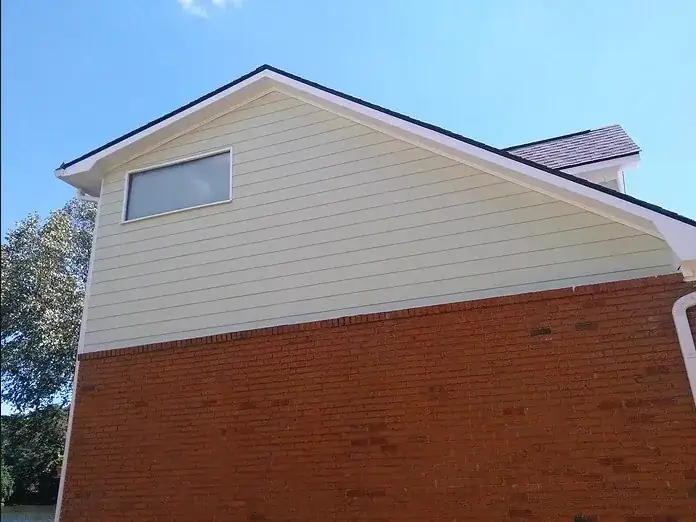
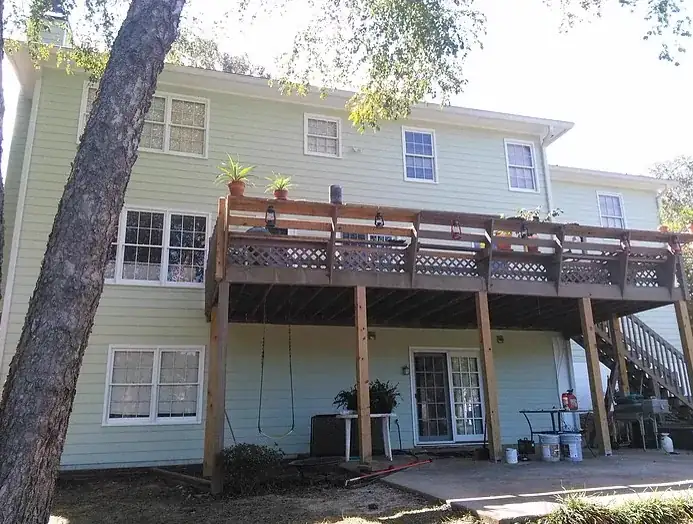
This project's photographs show fiber cement siding on the home's side and rear elevations. Horizontal siding and contrasting trim define the walls around the existing windows and deck.
What the photographs show
The images cover the side and rear of the home, where the new horizontal siding and trim are visible around the existing windows and alongside the deck. The front of the home is not part of this comparison, and the photographs document the finished elevations only. The trim lines at the corners and window openings are consistent from view to view, and the siding courses run level across each wall.
Siding the sides and rear of a home
Side and rear elevations are easy to overlook, but they take the same weather as the front of the house — often more, since shaded walls stay damp longer and give mildew and rot more time to work. Decks add another complication: where a deck ledger meets the wall, the siding and flashing details matter a great deal, because that junction is one of the most common places for water to enter a wall. When siding is replaced, matching the profile and finish across every elevation keeps the whole exterior consistent, and the walls nobody sees from the street get the same protection as the ones everybody does.
Why fiber cement suits these walls
Fiber cement siding is a common choice for this kind of work because it resists moisture and holds its finish in Georgia's climate. On shaded side and rear walls especially, a material that does not rot and does not feed termites removes two of the biggest long-term risks to a damp elevation. It also paints well, so the finish on the back of the house can match the front exactly.
Thinking about your own exterior?
If the sides or rear of your home are showing wear — soft spots, peeling paint, warped boards — those elevations are worth a close look before the damage spreads. Learn about fiber cement siding replacement and contact EZY Exteriors to discuss your own exterior. Free estimates are for homeowners on work they plan to have done.
Moisture and the walls nobody sees
The back and side walls of a home tend to age faster than the front, for simple reasons. They often get less direct sun, so morning dew and rain dry more slowly. Landscaping grows against them. Sprinklers hit them. And because nobody looks at them every day, problems develop longer before anyone notices. By the time peeling paint or a soft spot is obvious on a rear wall, the damage behind the surface has usually been progressing for a while. A periodic walk around the whole house — not just the street side — is the simplest way to catch these issues early.
Working around decks and outdoor areas
Rear elevations usually come with complications the front does not: decks, patios, outdoor kitchens and landscaping all sit against the walls being worked on. Siding work around a deck requires care at the ledger board, where the deck frame meets the house, because that junction is both structural and a common water entry point. The photographs on this page show the finished siding running cleanly alongside the home's existing deck, with trim finishing the edges.
Related services
Elevation work like this pairs naturally with seamless gutters to manage roof runoff, and with exterior painting for any surfaces outside the siding scope. Browse more completed projects, read recent articles, or see the service areas we cover.
Checking your own side and rear walls
A simple habit worth adopting: once or twice a year, walk the full perimeter of your home and actually look at the walls nobody sees from the street. Press gently on any siding that looks suspect — soft spots announce themselves. Look at the courses nearest the ground, the areas behind shrubs, and anywhere a deck or addition meets the wall. Check the trim at corners and windows for gaps. Most siding problems are inexpensive when caught at this stage and expensive when found later, and the walk takes ten minutes.
Getting an assessment
If a walkaround turns up something concerning — a soft spot, a gap, a section that looks tired — an on-site assessment will show what is actually going on behind the surface. EZY Exteriors handles fiber cement siding and vinyl siding across the Atlanta area. Browse other projects, read recent articles, or contact us to discuss your exterior. Free estimates are for homeowners on work they plan to have done.
The value of a consistent finish
When every elevation of a home is renewed together, the exterior goes onto a single maintenance clock — no wall aging faster than another, no mismatched repairs, no guessing which section was done when. The side and rear views on this page show that consistency: the same coursing, the same trim standard, the same finish carrying around the home. It is the quiet difference between a house that looks maintained and a house that looks patched.
Working with a local siding contractor
Siding is a trade where local experience shows. A contractor who works across the Atlanta area every week knows the housing stock — the neighborhoods, the common construction details, and what Georgia weather does to each material over time. EZY Exteriors handles fiber cement siding and vinyl siding across the region, and projects like this one are our daily work. If your home's siding is due for attention, contact us to schedule an assessment, or browse other projects to see more completed work. Free estimates are for homeowners on work they plan to have done.
Project photos