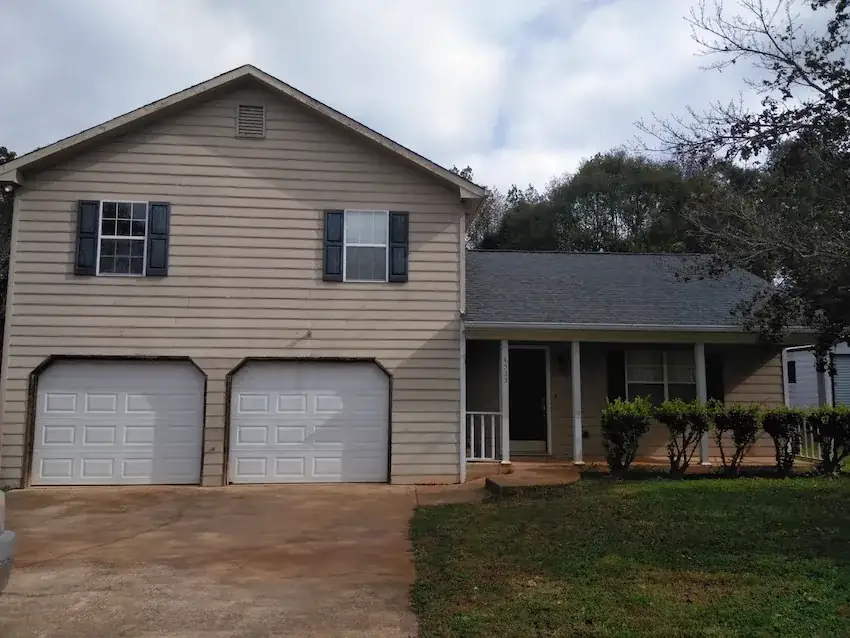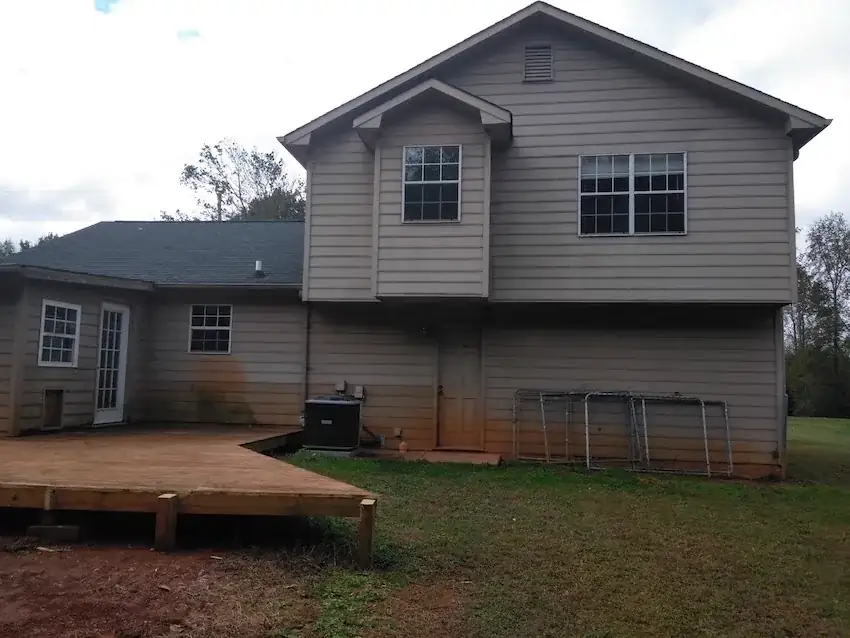
The house before we started
Rod's home had the original builder-grade vinyl on it, and it had reached the point where every elevation told the same story: chalky, faded color on the south and west walls, a handful of panels that had been cracked by a mower or a ladder and never replaced, and loose courses along the back where the locking edge had let go and the wind had worked it the rest of the way. From the street it read as a tired house even though the structure underneath was in good shape.
The homeowner's goal was straightforward. He was not looking to remodel. He wanted the exterior to stop looking twenty years old, he wanted to stop worrying about what was getting behind the loose panels, and he wanted to spend the money once.
What we found under the old panels
Once we pulled the field panels off, most of the sheathing was sound, which is what we expect when the failure is cosmetic rather than a water intrusion problem. The two areas that needed attention were the wall below the rear gutter, where years of overflow had kept the bottom courses damp, and a section of trim at a window head where the original flashing had been installed short. Both were addressed before any new material went up: replacement sheathing, new wrap, and proper head flashing lapped over the barrier instead of tucked behind it.
What we installed
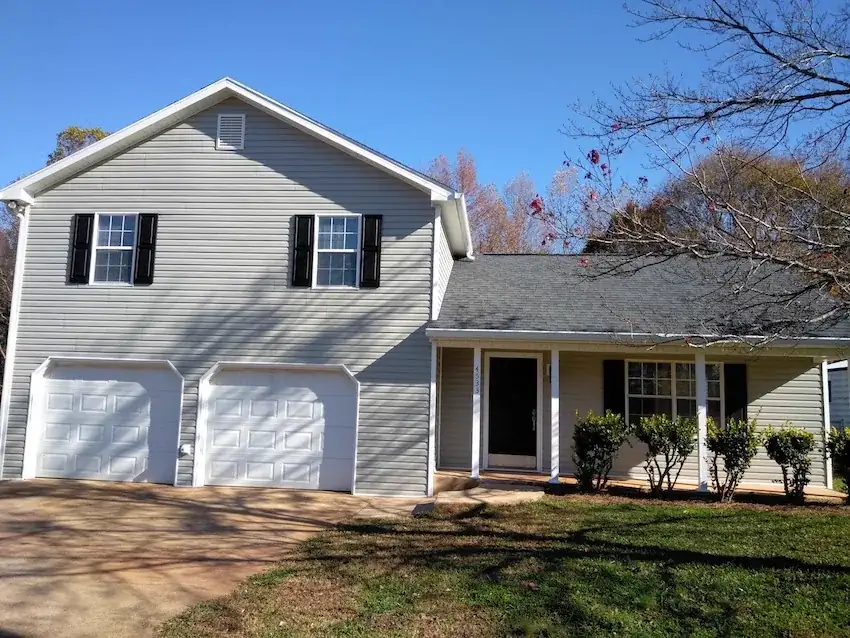
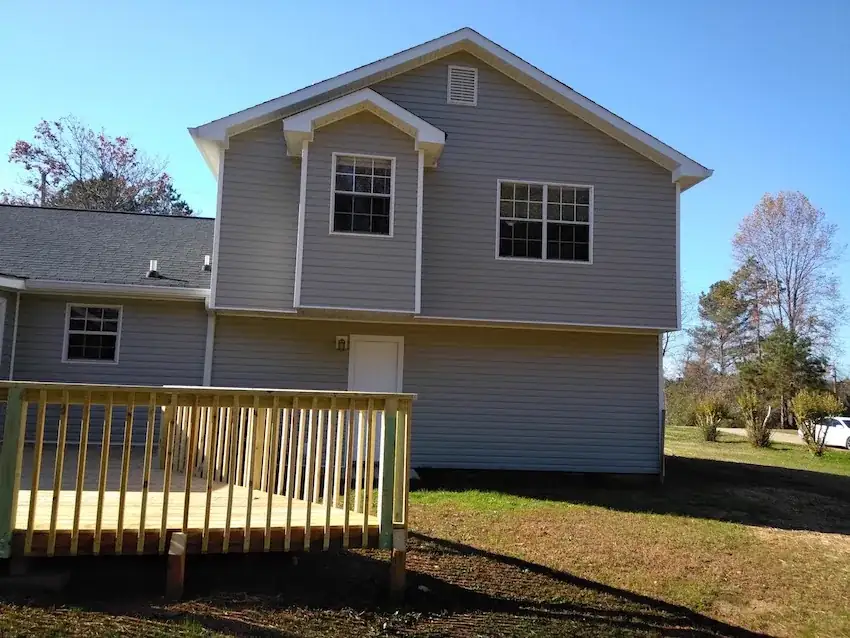
The house was re-sided in premium-gauge vinyl with a deeper profile than the original, which is a large part of why the finished elevations look heavier and more expensive. New corner posts, wider window surrounds and fresh J-channel replaced the thin builder accessories, and the soffit and fascia were brought into the same color family so the roofline reads as one continuous detail instead of three different whites.
The result
The visible change is the color and the shadow line, but the durable change is what happens the next time a storm blows through: a continuous weather barrier, correctly flashed openings, and panels hung with the right nail spacing so they can move without buckling. Rod's exterior is now a maintenance item measured in occasional rinsing rather than annual repair.
Why vinyl siding still wins on a lot of Georgia homes
Vinyl gets an unfair reputation, largely because of thin, low-grade panels sold on price alone. The product we install is not that. Modern insulated and premium-gauge vinyl has a thicker profile, a stiffer nail hem, better locking, deeper embossing and factory color that runs all the way through the panel, so a scuff does not show as a white streak. It never needs painting, it does not rot, and it shrugs off the humidity that destroys wood and hardboard siding across metro Atlanta.
For homeowners who want the biggest visible improvement per dollar, vinyl is usually the answer. Paired with new corner posts, wider window surrounds, fresh soffit and a coordinated trim color, a vinyl re-side changes the entire character of a house rather than just refreshing it.
How we install it
- 1.Full tear-off. The old siding comes off. We do not install new panels over failed material, because that hides rot and traps moisture.
- 2.Inspect and repair. We check sheathing, framing, window flanges and bottom plates and replace anything soft, split or insect-damaged.
- 3.House wrap and flashing. A continuous weather barrier goes on, lapped in the right direction, then window heads, doors and roof-to-wall junctions get flashed.
- 4.Starter, corners, then field. Starter strip is set level, corner posts and J-channel go in, and panels are hung with the correct nail spacing so they can expand and contract without buckling or oil-canning.
- 5.Trim details. Soffit, fascia, frieze and accessory pieces are fitted so the finished lines are straight and the transitions look intentional.
- 6.Clean site. Cutoffs and fasteners collected, debris hauled, final walk-through with the homeowner.
What it costs and how long it takes
A typical vinyl re-side in our area is a several-day to one-week project once material is on site. Price depends on square footage, panel grade, whether insulated backing is included, how many stories, and how much repair we find under the old siding. We put the repair allowance in writing before we start, so nothing about the number moves for a reason the homeowner did not approve.
How we work with homeowners
EZY Exteriors was founded by a craftsman, not a call center, and the way we run a job reflects that. Every estimate is free, and it is a real written scope rather than a number scribbled on a card. We tell you what we found, what we are replacing, what we are not touching and what the allowance is if we open a wall and discover more than the photos showed. Pricing is straight. There are no same-day discounts, no financing pressure and no scare tactics about your roof failing next week.
Our crews are vetted, experienced installers who do this work every day, and a project manager stays on the job so questions get answered by someone who has actually been on site. We document work in progress with photos, including the parts that get covered back up, so you know what you paid for.
We do not process insurance claims and we are not adjusters. What we will do is inspect, document what we find and give you a clear scope you can hand to your carrier if the damage is genuinely storm related. If it is normal wear, we will tell you that too.
Considering a similar vinyl siding project?
If you are in metro Atlanta and North Georgia and looking at a vinyl siding project on your own home, the fastest path is a free on-site estimate. We will walk the exterior with you, point out what is actually failing and what has life left, explain the material options in plain terms and put a written scope and price in your hands. There is no obligation and no follow-up pressure.
Photos of finished work like this one are the best way to judge a contractor, so browse our other projects, read our homeowner reviews, and then reach out when you are ready. We serve metro Atlanta and North Georgia and the surrounding communities, and we are happy to tell you when a repair is the smarter spend than a replacement.
Project photos